

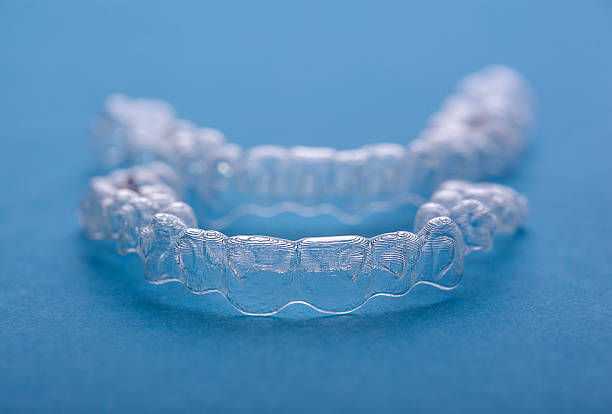
Invisalign can correct many cases of protruding front teeth by gradually changing the position and angle of the incisors, your front teeth. Whether clear aligners can reach your goal depends on how far the teeth protrude and how much space your arches have. Root position, your bite, and whether the problem involves the teeth, the jaws, or both also matter.
Many adults in Huntingdon Valley first notice prominent front teeth in photos. Teeth that sit forward can show more when you smile, make relaxed lip closure harder, or change how your profile looks. Some people simply feel self-conscious about them.
Invisalign for protruding front teeth works by moving teeth. It does not reshape adult jawbones, and it cannot guarantee a specific change in lip position or facial profile.
Four factors shape what treatment can do: incisor angle, front-tooth position, available space, and your jaw relationship. That’s why First Class Dental looks for the cause before suggesting any treatment. Patients from Lower Moreland Township get a clear explanation of what’s possible and what isn’t. At our Jenkintown office, the final decision stays with you.
What Causes Front Teeth to Protrude Forward?
“Protruding teeth” describes what you see in the mirror. Several different problems can create that look, and each one calls for different planning.
Common contributors include:
- Front teeth that tilt forward
- How the upper and lower dental arches fit together
- Crowding or spacing patterns
- Inherited differences in jaw size or position
- Oral habits, such as thumb sucking or tongue thrusting
- Teeth shifting after earlier orthodontic treatment
- Teeth drifting because of gum disease
Most cases involve more than one factor. Habits and genetics play a role for some people, but neither explains every case.
Proclined Incisors and Forward Tooth Inclination
Proclined incisors are front teeth that tilt outward toward the lips. Dentists also call this labial inclination. The crown, the part you see, angles forward while the root may sit in a fairly normal position.
A tooth can also sit forward as a whole, with crown and root moved together. The difference matters, because tilting a crown back is a simpler movement than repositioning an entire tooth.
Jaw Relationships That Make Upper Front Teeth Look Prominent
Sometimes the teeth are only part of the story. The upper jaw (maxilla) may sit forward, or the lower jaw (mandible) may sit back. This pattern is called a skeletal Class II relationship.
When the jaws create the gap, the problem is skeletal. When the teeth create it, the problem is dental. Many adults have some of both. Adult jaws have stopped growing, so a significant skeletal difference may need treatment beyond aligners alone.
Spacing, Crowding, and Tooth Position Changes
Protrusion often appears alongside other alignment issues. Spaces between the front teeth can let them fan outward. Crowding can push one or two teeth forward when the arch lacks room. The shape of the arch also affects how far forward the front teeth sit.
How Gum Disease or Previous Orthodontic Relapse Can Affect Front-Tooth Position
Advanced gum disease can weaken the bone that holds teeth in place. As support decreases, front teeth may drift forward and open spaces. This is called pathologic tooth migration.
Teeth can also shift years after braces or aligners, especially without consistent retainer wear. In either case, active gum disease needs treatment before orthodontic movement begins. Moving teeth through inflamed tissue can put their support at risk.
What Is the Difference Between Protruding Teeth, Overjet, and Overbite?
Patients often call all three “buck teeth,” but each term describes something different:
- Dental protrusion means teeth are positioned or tilted forward relative to their supporting bone.
- Overjet is the horizontal distance between the upper and lower front teeth.
- Overbite is how much the upper front teeth vertically overlap the lower ones.
A person can have one, two, or all three at once. Telling them apart is the first step in planning treatment.
How Increased Overjet Makes Upper Front Teeth Stand Out
When overjet increases, the upper incisors sit farther in front of the lower ones. From the side, that horizontal gap makes the upper teeth look more prominent. Forward-tilted upper incisors, a lower jaw that sits back, or both can increase overjet.
Why a Deep Overbite Is a Different Problem
A deep overbite is a vertical issue. The upper front teeth cover too much of the lower front teeth when you bite down. It can occur with or without increased overjet. Reducing a deep overbite is a separate goal, covered in more depth under Invisalign bite correction.
Why the Difference Changes Invisalign Treatment Planning
Tilting forward-leaning incisors back uses different mechanics than managing a jaw-size difference. A mostly dental problem may respond well to aligners. A mostly skeletal one may limit how much the teeth can safely change. Naming the real problem early helps set realistic expectations.
How Does Invisalign Move Protruding Front Teeth Backward?
Invisalign uses a series of custom clear aligners. Each one applies small, controlled forces that move teeth a short distance toward a planned position.
Moving protruding teeth back involves more than pushing their edges inward. A tooth can move in several ways:
- Tipping, where the crown tilts back and the root tip may swing slightly forward
- Controlled tipping, where the crown tilts back while the root tip stays near its starting point
- Bodily movement, where the crown and root move back together
- Torque, which controls the angle of the root inside the bone
How Controlled Incisor Retraction Works
Incisor retraction means moving the front teeth back within the dental arch. With aligners, it happens in planned stages. Each aligner moves the teeth a fraction of a millimeter in a set direction.
The teeth need somewhere to go, so space is planned first. The roots need guided movement too, along with the visible edges. Some cases add attachments or other auxiliaries to help the aligners control the teeth.
Why Root Position Matters When Correcting Protrusion
A front tooth can look correctly placed while its root sits at the wrong angle. Root position affects how well the bone and gums support the tooth. It also affects how your teeth meet when you bite and how stable they stay afterward.
Every tooth has to stay within the bone around it. Good root control keeps movement inside those anatomical limits.
How Attachments and Elastics May Support More Difficult Movements
Some retraction movements need extra help. Attachments are small, tooth-colored shapes bonded to selected teeth. They give aligners extra grip, and how Invisalign attachments work depends on the movement planned.
Orthodontic elastics are small rubber bands that connect the upper and lower aligners. They can help correct how the upper and lower teeth line up. Whether you need either one depends on your treatment plan.
Where Does the Space Come From to Move Protruding Front Teeth Back?
Teeth can’t move back into space that doesn’t exist. Before retraction begins, your dentist has to find room without harming the bite, gums, or bone.
This is one of the most misunderstood parts of treatment. The right strategy depends on how far the teeth need to move and what your anatomy allows. Often, more than one approach is combined.
Using Existing Spaces Between Teeth
If gaps already exist between the front teeth, they can sometimes provide the room needed. Closing those spaces lets the incisors move back as they come together. This approach often fits cases where protrusion and spacing appear together.
Interproximal Reduction to Create Limited Space
Interproximal reduction (IPR) removes a very small amount of enamel from between selected teeth. The amount is measured and planned before treatment starts.
IPR creates limited space, so it suits milder cases. It typically can’t create enough room to correct major protrusion on its own.
Moving Posterior Teeth to Improve Space Distribution
In some cases, the back teeth can be moved backward to create room. This is called distalization. It depends on the bone behind the teeth, wisdom tooth position, and how the bite fits together. Not every mouth has enough space for it.
When Extractions May Be Considered in Severe Protrusion Cases
Some cases need more space than other methods can create. Removing selected teeth, often premolars, may then become part of the plan. Extraction is not routine, and it is not automatically harmful.
The decision weighs your facial profile, gum and bone support, bite, and goals. Extraction cases also tend to be more complex, and some may be better suited to braces or specialist care.
Can Invisalign Correct Both Protruding Teeth and an Overbite?
Sometimes, yes. Protruding teeth often come with other issues, including increased overjet, a deep overbite, a Class II bite, crowding, or rotated teeth. Many cases need several of these corrected together, and the plan has to address each one.
When Protrusion Is Mainly a Dental Alignment Problem
When the main issue is forward-tilted teeth, aligners have a clear target. These cases are often more manageable with Invisalign. They still need careful planning for space, root control, and the bite.
When the Jaw Relationship Makes Treatment More Complex
When the jaws themselves are out of balance, moving teeth can only do so much. Tilting teeth to mask a jaw difference may compromise the bite or gum support. These cases may call for a specialist orthodontic evaluation and other treatment options.
Can Invisalign Improve Lip Support or the Appearance of the Facial Profile?
Sometimes, but results vary. Your lips rest over your front teeth and the bone behind them. When protruding teeth move back significantly, lip posture and profile may change for some people.
How much the lips respond depends on:
- Where the teeth started
- How far and in what way they move
- Lip thickness and anatomy
- The thickness of the facial soft tissue
- Jaw relationships
- Your individual biological response
A systematic review found that lip changes don’t always follow tooth movement in proportion. That’s why aligner treatment can’t promise a specific lip or profile change.
How Front-Tooth Position Can Influence Lip Posture
Prominent upper incisors can push the lips forward. Some people also find it hard to close their lips without straining. When the teeth are the main cause, moving them back may help the lips rest more comfortably. When jaw structure or lip anatomy is the main cause, tooth movement may change less.
Does Retracting Front Teeth Always Change the Profile?
No. Modest tooth movement may have little visible effect on the profile. Soft-tissue response also differs from person to person, even with similar tooth movement.
Why Too Much Retraction Can Create Aesthetic or Functional Tradeoffs
Moving the front teeth as far back as possible isn’t always the best result. Treatment planning considers the whole face. Excessive retraction can reduce lip support, flatten the angle of the teeth, push roots toward the limits of the bone, or affect the bite.
Carefully planned retraction works within those limits. The goal is balance between the teeth, lips, and face.
How Does Invisalign Affect the Smile Line and Front-Tooth Display?
Moving the front teeth changes how they relate to the neighboring teeth, your lips, and your bite. That can affect several parts of your smile:
- Where the biting edges of the front teeth sit
- The angle of each tooth
- The smile arc, the curve formed by the edges of your upper front teeth
- How much gum shows when you smile
- Anterior guidance, the way your front teeth guide your jaw as it slides forward
- How much of each tooth is visible
Straighter teeth alone may not create the smile you want. The goal is a natural balance with your face.
Why Incisor Angle and Incisal Edge Position Affect Smile Balance
Front teeth that tilt forward can look longer and more prominent, especially from the side. Where the biting edges sit affects how they follow the curve of your lower lip when you smile. Small changes in angle can make a visible difference in how balanced a smile looks.
Can Correcting Protrusion Make Teeth Look Less Prominent?
In many suitable cases, yes. Retracting and uprighting the incisors can reduce how much they stand out. How much change you’ll see depends on how far the teeth actually move and on your facial anatomy.
Can Invisalign Fix Severely Protruding Front Teeth?
It depends on the cause as much as the severity. Two people with equally prominent teeth may need very different plans.
Your dentist assesses:
- How much the teeth and the jaws each contribute
- Root angle and position
- Gum and bone support
- How much space is needed
- Existing crowns or veneers
- How your teeth meet
- What you hope to achieve
When Invisalign May Be a Suitable Option
Invisalign may suit cases where the planned movements fall within what aligners can achieve predictably. Consistent wear is part of the equation too. Aligners only work while they’re in your mouth, usually 20 to 22 hours a day.
When Braces or Specialist Orthodontic Treatment May Be Better
Large root movements, extraction space closure, and major jaw differences can be harder to manage with aligners. Some complex movements are more predictable with fixed appliances, a tradeoff explored in Invisalign vs. braces for adults. For significant skeletal cases, a specialist evaluation may be the right next step.
Can Invisalign Correct Protruding Teeth in Adults?
Yes, adult teeth can move at any age. Adults bring a few extra factors to the plan, including gum health, bone limits, and existing dental work. Adult jaws no longer grow, so tooth movement alone can’t change the jaws themselves.
Why Periodontal Health Matters Before Incisor Retraction
Teeth move through the alveolar bone, the bone that holds their roots. If that bone or the gums are compromised, movement has to be more conservative. Planning software can show a movement on screen that the bone can’t safely support. Your real anatomy sets the limits.
How Existing Crowns or Veneers May Affect Treatment Planning
Restored teeth need extra planning. Attachments may bond differently to porcelain than to natural enamel. Moving a crowned tooth can also change how it looks next to its neighbors. In some cases, a restoration may be updated after orthodontic treatment to match the new position.
How Do Dentists Determine Whether Invisalign Can Correct Protrusion?
The evaluation starts with understanding why your teeth sit forward. At First Class Dental, that includes:
- A smile and facial assessment
- Measuring incisor angle
- Checking overjet and overbite
- Bite analysis
- A gum and periodontal evaluation
- Reviewing roots and bone with appropriate X-rays or records
- Space analysis
- Digital treatment planning
- A clear discussion of likely results and limits
Why Photographs Alone Cannot Determine Treatment Complexity
A front-facing selfie shows the crowns of your teeth. It can’t show root position, available bone, or how your jaws relate. Two smiles that look alike in photos may need very different plans.
How Digital Treatment Planning Helps Evaluate Incisor Movement
Invisalign planning software maps each stage of tooth movement. It shows how much retraction is planned, in what order, and where the space will come from. These records help shape personalized Invisalign treatment around your teeth, bite, and goals.
A digital simulation is a planning tool, and biology doesn’t always follow it exactly. A clinical study found that achieved tooth movement averaged about half of what was planned. That’s one reason refinement aligners are a common part of treatment.
How Long Does Invisalign Take for Protruding Front Teeth?
Treatment time depends on your case. Key factors include:
- How much space needs to be created
- How far the incisors move back
- How much root control is needed
- Whether the bite also needs correction
- How your teeth respond
- How consistently you wear your aligners
- Whether refinements are needed
Your personal factors matter more than averages, and typical Invisalign treatment timelines vary by concern. Your dentist can estimate your timeline after the evaluation.
Invisalign for Protruding Front Teeth Near Huntingdon Valley and Lower Moreland
First Class Dental provides Invisalign evaluations at our office on Cottman Street in Jenkintown. If you’re considering Invisalign in Huntingdon Valley 19006, our office is a short drive away. Adults in Lower Moreland Township are close by as well.
Dr. Cohen starts by finding the cause of the protrusion, whether it’s tooth angle, spacing, gum changes, or jaw position. He then explains what aligners can realistically achieve and where other options may fit better. You get the full picture, and the decision stays yours.
Frequently Asked Questions About Invisalign for Protruding Front Teeth
Can Invisalign push protruding front teeth back?
Yes, in many suitable cases. Invisalign applies controlled forces that can retract the front teeth. How far they move depends on your diagnosis, your bite, and the space available.
Can Invisalign fix buck teeth?
“Buck teeth” usually describes prominent or protruding upper front teeth. Invisalign can correct some cases, especially when the problem is mainly dental. A significant jaw difference may require additional treatment approaches.
Does Invisalign change your lip shape or facial profile?
It can affect lip posture in some patients, because the lips rest over the front teeth. Soft-tissue response varies with anatomy and the amount of movement. Clear aligners can’t guarantee a specific profile change.
Can Invisalign fix an overjet?
Invisalign can improve overjet in selected cases. Overjet is the horizontal gap between the upper and lower front teeth. Results depend on whether that gap comes from tooth position, the jaws, or both.
Do protruding teeth always require extractions?
No. Many cases gain space through other methods, such as closing existing gaps, IPR, or moving back teeth. Extractions are considered only after a full orthodontic evaluation and depend on your treatment goals.
Is Invisalign better than braces for protruding teeth?
Neither is universally better. Both move teeth, and the right choice depends on how complex the movements are. Some protrusion cases suit Invisalign, while others benefit from different orthodontic mechanics.
Can adults correct protruding front teeth without traditional braces?
Many adults can consider Invisalign for protruding front teeth. Adult teeth still respond to orthodontic forces. Gum health and jaw relationships determine whether aligners are the right fit.
Find Out Whether Invisalign Can Improve Your Front-Tooth Position and Smile Balance
If your front teeth stick out, an Invisalign consultation can help you understand why. Dr. Cohen evaluates your tooth and root position, reviews the space available, and determines whether Invisalign fits your case.
He also helps you set realistic goals for both function and appearance. Each option comes with its tradeoffs explained, and the choice stays with you.
Adults from Huntingdon Valley are welcome to schedule an Invisalign consultation at our Jenkintown office. Patients from Lower Moreland Township can book an evaluation with Dr. Cohen as well.
