

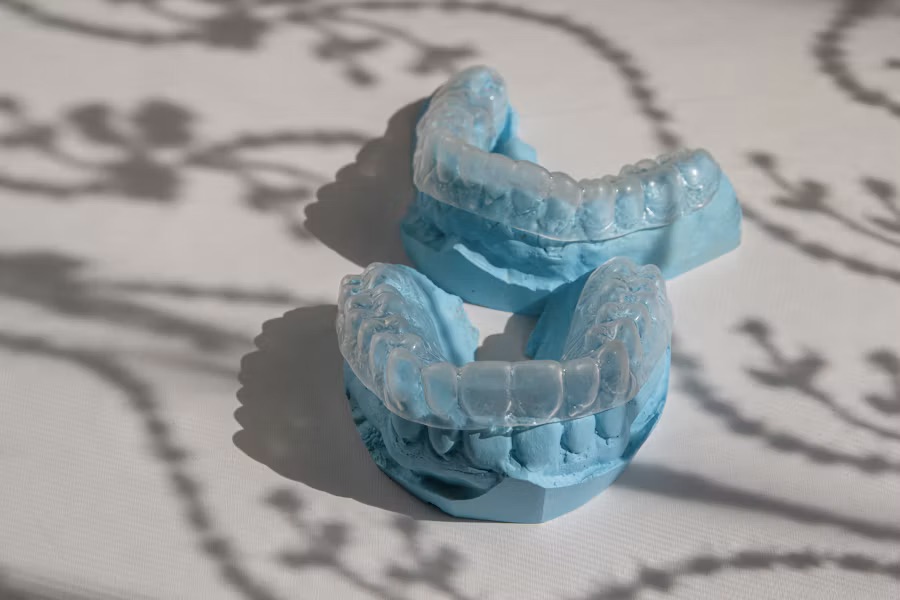
Both Invisalign and traditional braces can straighten teeth and correct many bite problems. Neither option is universally better. The right choice depends on treatment complexity, lifestyle, aesthetics, oral hygiene habits, and willingness to follow treatment instructions closely.
Your orthodontic problem, combined with your daily habits and personal preferences, determines which system fits you best. A patient in Huntingdon Valley with mild crowding and a packed work schedule may prioritize different things than a patient with a more complex bite issue.
Adults often weigh factors that matter less to teenage patients. Professional appearance, speaking comfortably during meetings, eating without restriction, oral hygiene, comfort, and appointment flexibility all play a role. How visible the treatment is day to day matters too, along with predictability for adults in Lower Moreland and Jenkintown juggling careers and family schedules. Patients with crowns, bridges, or other complex dental restorations often have extra questions about which system works best around existing dental work.
Many adults throughout Montgomery County and nearby Philadelphia compare Invisalign clear aligners with traditional braces, sometimes called clear braces or invisible braces when the goal is a more discreet look, before starting orthodontic treatment. Both fall under the umbrella of adult orthodontics, and both work toward better tooth alignment, bite correction, and straighter teeth for patients dealing with malocclusion, crowding, or crooked teeth. This guide breaks down the practical differences so you can have a more informed conversation with your dentist.
How Invisalign and Traditional Braces Move Teeth
Invisalign and traditional braces rely on the same biological process. Controlled orthodontic pressure moves teeth gradually through the jawbone, producing tooth movement one small step at a time.
This pressure triggers a response in the periodontal ligament, the tissue connecting each tooth to the bone around it. That response leads to bone remodeling. Bone breaks down slightly on one side of the tooth and rebuilds on the other. This gradual process lets the tooth and its root shift into a new position over time.
According to the American Dental Association, orthodontic treatment works by applying gentle, sustained pressure to guide teeth into a healthier position. This pressure also helps correct how the upper and lower teeth meet.
The two systems differ in how they deliver that pressure. Traditional braces use brackets and wires to apply continuous orthodontic force. Invisalign aligners apply that same orthodontic tooth movement through a series of clear trays, each one delivering a programmed force in planned stages.
How Invisalign Clear Aligners Move Teeth
Invisalign treatment starts with digital treatment planning. Your dentist uses digital scans to map out a sequence of tooth movements before any aligners are made.
You then wear a series of custom aligner trays, each one slightly different from the last. Every one to two weeks, you switch to the next tray in the sequence, and each change nudges your teeth a small amount closer to their planned position.
Some tooth movements need extra help. In these cases, your dentist may bond small, tooth-colored attachments to certain teeth to improve control over specific movements. These attachments work alongside the aligners rather than replacing them.
How Brackets and Wires Move Teeth With Traditional Braces
Traditional braces use small brackets bonded directly to each tooth. A thin archwire connects the brackets and applies steady pressure across your entire smile.
During adjustment visits, your dentist tightens or replaces the archwire to keep guiding your teeth toward their final position. This creates continuous force between appointments rather than the staged approach used with aligners.
Some cases also call for elastics, which are small rubber bands that add extra pulling force between the upper and lower teeth. Braces remain a well-established orthodontic system, and they still offer real advantages for certain complex movements.
Invisalign vs Braces for Adults: Which Is Less Noticeable?
Appearance is one of the biggest factors adults weigh when comparing clear aligners vs braces. Invisalign trays are clear and generally less visible than metal brackets and wires, but they are not completely invisible, so calling them invisible braces isn’t quite accurate.
A few things affect how noticeable clear braces are day to day. Attachments can create a slightly textured look on certain teeth, and close conversations or bright lighting can make the edges of a tray more visible. Elastics, when needed, and buildup on an aligner that isn’t cleaned regularly can draw attention as well.
Traditional metal braces are more visible by comparison, since the brackets and wires sit on the front of each tooth. Adult braces built around ceramic or tooth-colored brackets can narrow that gap somewhat, but Invisalign for adults still tends to be the more discreet orthodontic treatment for patients who want their appliance to stand out as little as possible.
Why Many Working Adults Prefer Clear Aligners
Adults in client-facing roles often lean toward Invisalign because of situations where appearance and speech matter most. Business meetings, presentations, weddings, and other social events are common examples patients mention.
Because aligners are removable, you can take them out for photographs or important conversations. That said, Invisalign still needs to be worn as instructed for treatment to progress on schedule. Removability offers flexibility, not a break from the treatment plan.
Are Ceramic or Clear Braces an Alternative?
Tooth-colored or ceramic brackets can reduce the visibility of traditional braces compared with standard metal brackets. They blend more closely with natural tooth color while still using the same wire-based system.
Orthodontic aesthetics exist on a spectrum rather than a simple choice between visible braces and invisible aligners. Ceramic braces sit somewhere in between, and your dentist can explain whether they suit your case.
Invisalign vs Braces for Eating and Drinking
Daily eating and drinking habits look different depending on which treatment you choose. With Invisalign, aligners generally come out for meals, which means fewer food restrictions overall. Ideally, you clean your teeth before putting the trays back in, though this isn’t always possible.
Drinking works a little differently. Cold water is generally fine with aligners in, but hot drinks and anything sugary or staining, like coffee or red wine, are usually better with the trays removed first.
With traditional braces, the brackets and wires stay in place around the clock. Hard and sticky foods can loosen brackets or bend wires, so patients need to protect their appliances at mealtime. Drinks don’t pose the same risk to braces themselves, though sugary or staining drinks still call for good oral hygiene around brackets and wires.
Can Adults Eat Normally With Invisalign?
Removability makes mealtimes convenient with clear aligners. You can eat what you like without worrying about damaging brackets or wires.
Frequent removal can work against you, though. Aligners need close to a full schedule of daily wear to keep treatment on track, and patient compliance with that schedule matters more than any single meal. Taking trays out too often, or leaving them out too long, can slow your progress and affect treatment tracking.
What Foods Can Be Difficult With Braces?
A few food categories tend to cause the most trouble for patients wearing traditional braces, in a way that Invisalign patients don’t experience since their aligners come out at mealtime. Very hard foods can bend wires or snap brackets. Sticky foods can pull brackets loose or get trapped around the wire.
Foods that require heavy biting force, like whole apples or hard pretzels, can also damage brackets if you’re not careful. Your dentist can walk you through simple adjustments, like cutting food into smaller pieces, to protect your appliance.
Invisalign vs Braces for Oral Hygiene and Gum Health
Orthodontic appliances change how plaque builds up around your teeth, and that buildup raises the risk of gum inflammation if it isn’t cleared away regularly. Both systems require extra attention to brushing, flossing, and cavity prevention throughout treatment.
With Invisalign, trays come out for brushing and flossing, which allows for a fairly conventional hygiene routine. With traditional braces, brackets and wires create more surfaces where plaque can collect, so cleaning takes more care and time.
It’s worth noting that Invisalign doesn’t eliminate hygiene risk on its own. Aligners worn over teeth that aren’t cleaned well can still trap bacteria against the enamel and irritate the gumline.
Is It Easier to Brush and Floss With Invisalign?
Removable aligners generally make brushing and flossing easier since you take them out first. You can use your normal toothbrush and floss without navigating around brackets or wires.
The aligners themselves need regular cleaning too. Rinsing and brushing the trays helps prevent buildup that could affect both hygiene and appearance.
Why Gum Health Matters During Adult Orthodontic Treatment
Orthodontic treatment depends on healthy gums and supporting bone to work as planned. Periodontal health plays a direct role in whether teeth can move safely and predictably.
Gum disease is an infection of the tissue that holds teeth in place, and it typically starts with plaque buildup along the gumline, according to the National Institute of Dental and Craniofacial Research. Active gum disease can affect orthodontic candidacy, which is why your dentist evaluates gum health before recommending Invisalign or braces.
Which Treatment Is More Comfortable: Invisalign or Braces?
Both treatments involve some pressure, since moving teeth requires force on the roots and surrounding bone. Neither system is entirely free of discomfort, and it’s fair to expect some adjustment period with either one.
Invisalign can cause pressure when you switch to a new aligner, along with occasional tightness around attachments or tray edges. Traditional braces can cause bracket and wire irritation, along with soreness after adjustment appointments.
What Does Invisalign Pressure Feel Like?
Most patients describe a temporary tight or achy feeling for a day or two after starting a new aligner. This happens as your teeth respond to the next stage in the treatment plan.
The sensation typically fades as your teeth settle into the new tray. It tends to be milder than the discomfort some patients associate with wire adjustments.
What Does Braces Discomfort Feel Like?
Adjustment visits can leave teeth feeling sore for a day or two as the archwire applies new pressure. Some patients also notice temporary irritation on the inside of their cheeks or lips where brackets sit.
This discomfort is usually manageable and tends to improve as your mouth adjusts to the appliance. It shouldn’t be described as painless, but it’s also not something most patients find unbearable.
Invisalign vs Braces for Complex Orthodontic Problems
Treatment selection should start with an orthodontic diagnosis, not a preference for how the appliance looks. Complexity factors like severe crowding, difficult rotations, significant root movement, impacted teeth, vertical movement, bite discrepancies, and skeletal jaw relationships all influence which system works best.
Invisalign’s capabilities have expanded considerably, especially with the addition of attachments and elastics. Even so, traditional braces may still offer greater mechanical control for certain difficult tooth movements. Neither system automatically wins; the right answer depends on your specific case.
What Types of Cases Can Invisalign Treat?
Invisalign can address a wide range of orthodontic issues. This includes mild-to-moderate crowding, spacing between teeth, selected overbites, selected crossbites, selected open bites, rotated teeth, and relapse after previous orthodontic treatment.
Case selection plays a major role in predictability. A thorough evaluation helps your dentist determine whether your specific alignment or bite issue is well suited to clear aligners.
When Traditional Braces May Offer Better Control
Some cases benefit from the continuous, highly controlled mechanics that traditional braces provide. This includes severe rotations, significant tooth displacement, impacted teeth, complex root movements, and other cases that need especially precise, controlled mechanics from start to finish.
Braces don’t automatically become necessary just because a case is complex. Many complicated cases can still be treated successfully with Invisalign, depending on the specific movements required.
Can Invisalign Treat Bite Problems as Well as Crooked Teeth?
Invisalign can address many dental bite problems, not just crooked or crowded teeth. Severe skeletal discrepancies, where the upper and lower jaw don’t align properly, may require other approaches beyond clear aligners.
Diagnosis ultimately determines suitability for either system. Patients curious about how Invisalign improves bite alignment can find a deeper breakdown of bite correction on the practice’s blog.
Invisalign vs Braces for Patient Compliance
One of the biggest practical differences between these treatments comes down to compliance. Traditional braces are fixed to your teeth, so there’s nothing to remember to wear. Invisalign requires ongoing patient cooperation to stay on schedule.
Removable aligners create lifestyle flexibility, but that freedom comes with responsibility. Most patients need to wear their aligners 20 to 22 hours daily and change trays as instructed. They also need to avoid leaving aligners out for long stretches, keep scheduled appointments, and flag any tracking issues to their dentist.
Why Invisalign Requires More Daily Responsibility
Removable treatment only works when it’s worn consistently. Skipping wear time, even for a few hours here and there, can slow progress and push back your treatment timeline.
This isn’t about being a more disciplined patient. It’s simply how the system is designed to function, and most adults adjust to the routine within the first few weeks.
Why Braces Can Be Helpful for Patients Who Prefer Fixed Treatment
Fixed appliances offer a mechanical advantage: they apply force continuously without relying on daily wear decisions. For patients who know they’d struggle to keep track of removable aligners, that consistency can be reassuring.
This comes down to matching the treatment system to your behavior and preferences. Neither approach makes someone a better or worse patient.
Which Treatment Requires More Dental or Orthodontic Appointments?
Both treatments call for regular professional monitoring, though the type of visit differs. Invisalign visits often involve a tracking assessment to see how well your teeth match the treatment plan. They may also include attachment checks, digital monitoring, and additional aligners when needed.
Braces visits typically involve adjusting the archwire, checking that brackets remain secure, changing elastics if you’re using them, and evaluating overall tooth movement. Your dentist can give you a more specific sense of visit frequency once your treatment plan is set.
Invisalign vs Braces Treatment Time for Adults
Treatment time is driven mainly by the orthodontic problem itself, not by whether the appliance is clear or metal. The amount of movement needed, crowding severity, and bite complexity all factor in. So does your biological response, how consistently you follow instructions, and any refinements or missed visits.
Neither system is reliably faster across the board. For a closer look at Invisalign treatment timelines for different smile concerns, First Class Dental has covered this topic in more depth.
Invisalign vs Braces Cost: What Determines the Difference?
The cost of Invisalign and adult braces both depend on several variables rather than a fixed number. Treatment complexity, expected treatment length, the type of appliance used, monitoring requirements, financing options, and provider fees all play a role.
Insurance benefits can shift the cost of both clear aligners and traditional braces, and coverage varies by plan. Every case is different, so pricing conversations happen after an evaluation rather than before one. First Class Dental’s team can walk you through availablefinancing and payment options once your treatment plan takes shape.
Is Invisalign Always More Expensive Than Braces?
Not necessarily. The cost of Invisalign depends on your diagnosis, treatment complexity, your provider, your location, and your insurance benefits, rather than a simple comparison between the two systems.
Some straightforward Invisalign cases cost less than complex bracket-and-wire cases, and the reverse can also be true. A personalized quote after your evaluation gives you the clearest picture.
Which Option Fits Different Adult Lifestyles?
Lifestyle priorities can influence your decision, but they shouldn’t override clinical suitability. Business travel, frequent client interaction, dining habits, public speaking demands, your ability to stay compliant, and your hygiene routine all factor into which system feels more manageable day to day. Whether you’d rather manage a removable appliance or let a fixed one work in the background matters too.
Invisalign May Fit Adults Who Prioritize Discretion and Flexibility
Invisalign may suit adults who want a more discreet appearance and the flexibility to remove their aligners for meals or events. This works best for patients who are confident they can maintain consistent wear time and a solid hygiene routine.
Braces May Fit Adults Who Need Complex Movement or Prefer Fixed Treatment
Traditional braces may fit adults dealing with more complex movement needs, like severe rotations or significant tooth displacement, or those who simply prefer not to manage a removable appliance. The fixed mechanics offer predictable, continuous force without relying on daily wear habits.
How Dentists Determine Whether Invisalign or Braces Is Better for You
A proper orthodontic recommendation starts with a clinical examination, not a preference for one appliance’s look. Your dentist evaluates tooth position, bite analysis, periodontal health, digital scans, and root positioning before suggesting a path forward.
Your treatment objectives and lifestyle preferences matter too, but they’re weighed alongside the clinical picture rather than instead of it. At First Class Dental, this evaluation is how Dr. Andrew Cohen builds a personalized Invisalign treatment plan or determines whether traditional braces make more sense for your case.
Invisalign and Adult Orthodontic Treatment in Huntingdon Valley, Lower Moreland & Jenkintown
Adults in Huntingdon Valley and the 19006 area regularly ask about Invisalign and traditional braces during consultations at First Class Dental. Patients in Lower Moreland Township bring similar questions, often comparing the two systems before committing to treatment.
Jenkintown remains a core part of the practice’s patient base as well, alongside adults from surrounding Montgomery County communities. Every recommendation starts with an individualized evaluation rather than a one-size-fits-all answer.
Clear aligners and traditional braces both support adult orthodontics in different ways. Bite and alignment planning, along with long-term oral health, guide the conversation before any treatment begins.
Frequently Asked Questions About Invisalign vs Braces for Adults
Is Invisalign better than braces for adults?
Invisalign and braces both treat orthodontic alignment problems effectively. Treatment complexity and lifestyle preferences influence which appliance fits best. A clinical evaluation ultimately determines the most appropriate treatment for your case.
Is Invisalign faster than braces?
Treatment duration depends primarily on the amount of tooth movement required. Patient compliance strongly affects how quickly Invisalign progresses. Appliance type alone doesn’t determine how long treatment will take.
Can Invisalign fix the same problems as braces?
Invisalign can treat many alignment and bite problems successfully. Traditional braces may offer greater control for certain complex tooth movements. An orthodontic diagnosis determines which treatment suits your case.
Are braces better for severe crowding?
Severe crowding requires thorough orthodontic planning regardless of appliance type. Braces or Invisalign may be selected based on the complexity of movement needed. Space requirements and root position influence the overall treatment design.
Is Invisalign less noticeable than braces?
Clear aligners are generally less visible than metal brackets and wires. Invisalign attachments may remain somewhat noticeable up close. Aesthetic preference often plays a real role in adult treatment decisions.
Is Invisalign easier to clean than braces?
Removable aligners allow for fairly conventional brushing and flossing. Fixed braces require more careful cleaning around brackets and wires. Consistent oral hygiene remains essential no matter which treatment you choose.
Compare Your Adult Orthodontic Options in Huntingdon Valley and Lower Moreland
Choosing between Invisalign and traditional braces comes down to your tooth alignment, bite, oral health, treatment complexity, lifestyle, and personal goals. There isn’t a single right answer for every adult patient.
If you’re comparing clear aligners with traditional braces and want guidance from a dentist who takes time to explain your options, First Class Dental can help you understand your oral health and choose the right next step. Dr. Andrew Cohen and his team welcome adult patients from Huntingdon Valley and Lower Moreland for a personalized orthodontic evaluation, and Jenkintown patients continue to find that same individualized care close to home.
