

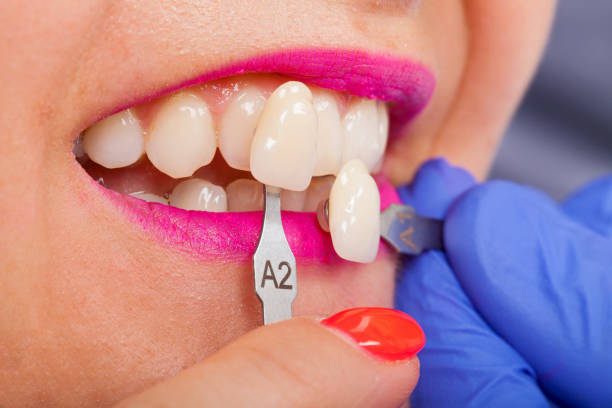
A complete smile redesign may be worth considering when several older cosmetic restorations no longer match in color, shape, position, or function. It also makes sense when repeated one-off repairs keep falling short of a consistent result. Replacing old cosmetic dental work isn’t always necessary, though, and not every aging crown or veneer needs attention. The decision should follow an evaluation of tooth health, restoration condition, bite, and your goals.
Picture a common case. A patient has four porcelain veneers placed fifteen years ago, two older crowns from a different dentist, and composite bonding repairs on a few edges. Meanwhile, the natural teeth beside them have darkened. Each restoration may still work, but the smile no longer reads as one design.
Good planning starts by sorting out what actually needs correcting. That might be a color mismatch, a visible crown margin, worn edges, gum recession, or a bite that has shifted. At First Class Dental in Jenkintown, Dr. Andrew Cohen evaluates each restoration on its own merits before recommending anything. Many of the patients who come to us with mixed older dental work live in Huntingdon Valley. Others come from nearby Lower Moreland.
Why can older cosmetic dental work start to look inconsistent?
Restorations and natural teeth don’t age at the same rate. Porcelain holds its color, composite picks up stain, and enamel slowly darkens. Gums can shift too. Over ten or twenty years, a smile that once matched can drift into several slightly different shades and shapes.
It helps to separate two kinds of change. Some are aesthetic: a color difference or a dull surface. Others are mechanical or biological failures, such as a fracture, decay, or a loose crown. The first may be a cosmetic choice. The second needs attention regardless of how it looks.
Natural teeth and dental restorations can change color differently
Natural enamel thins with age, and the dentin underneath tends to yellow. Coffee, tea, and wine add surface stain. Porcelain is highly color-stable by comparison, so a veneer placed years ago may look brighter than the teeth that have darkened around it.
Composite behaves differently again. It can absorb stains and lose some of its surface gloss over time. Translucency also varies between materials, so restorations can reflect light differently from natural enamel even when the base shades are close.
Whitening adds another wrinkle. It lightens natural teeth, but it generally doesn’t change the shade of crowns or porcelain veneers. Whitening around older restorations can actually make a mismatch more noticeable.
Older bonding may develop stains or changes in surface texture
Dental composite is a resin filled with fine glass or ceramic particles. Over years of chewing and brushing, its surface can roughen, and a rougher surface holds stain more easily. Small gaps at the edges can also pick up a thin line of discoloration.
How the bonding was polished, and whether it has been repolished since, affects how it looks today. Plenty of older bonding is still sound. A professional polish or a small repair is sometimes all it needs.
Gum recession can make restoration edges more visible
When a crown or veneer is placed, its edge, called the margin, is often tucked at or just under the gumline. If the gums recede, that margin can become visible. With some older crowns, especially porcelain fused to metal, the exposed edge may show as a dark line.
Recession can also expose part of the tooth root, which is usually darker than enamel. Uneven gumlines change how long neighboring teeth look. A visible margin doesn’t automatically mean decay, but it does justify a closer look.
Old restorations may reflect different cosmetic styles or treatments
Restorations placed by different dentists, at different times, with different materials rarely look identical. One crown may be slightly wider. A veneer may have a flatter edge or a brighter shade that matched the preferences of its era. The surface texture may differ from the teeth beside it.
None of that means the earlier work was poor. It means the pieces were designed separately, and they now share one smile.
What signs suggest cosmetic dental work needs professional evaluation?
Some changes are a matter of preference, while others point to a clinical problem. Signs worth having checked include:
- a new color difference between a restoration and nearby teeth
- a visible edge or dark line near the gums
- chips or cracks in porcelain or composite
- a crown or veneer that feels loose
- food that keeps catching in the same spot
- gums that bleed or stay irritated around a restoration
- a bite that feels different
- a tooth whose shape seems to have changed
Cosmetic changes that may not require replacement
Surface stains, minor roughness, and small aesthetic differences don’t always call for new restorations. Polishing can restore a dull surface. A small composite repair can fix a chip. Whitening natural teeth, or replacing just one restoration, may be enough to balance the smile. Diagnosis comes first, and the simplest effective fix usually wins.
Structural or biological problems that require closer assessment
Recurrent decay at a margin, a fractured crown, lost retention, open margins, and chronic inflammation around a restoration are different matters. These affect the health of the tooth underneath. A restoration can look fine and still have a problem at the margin. The reverse is also true, since an unattractive crown may be structurally sound. If you’re seeing changes around an older crown, our article on the signs a crown needs replacing explains what to watch for.
When is repairing one veneer, crown, or bonding restoration enough?
Often. Selective treatment is a legitimate plan, and it’s the right starting point for many patients. The decision depends on the restoration’s material, the type of defect, how much healthy tooth remains, and the condition of the restorations next to it.
Repairing small chips or surface defects
Some minor chips in porcelain or composite can be repaired with bonded composite. Composite restorations are generally easier to repair than ceramic. How long a repair lasts depends on the material, the size of the chip, and how much force that spot takes when you bite. A porcelain repair may not be invisible, and it may not last as long as the original restoration.
Replacing one restoration to match surrounding teeth
When one crown or veneer stands out and the rest of the smile looks right, replacing that single restoration can be enough. Matching it to older neighbors is the hard part. The new restoration has to agree with the existing ones on shade, translucency, ceramic texture, contour, and the color of nearby natural teeth. Single replacements can take extra shade work and a try-in visit. If a veneer is the one being replaced, our page on custom porcelain veneers covers how they’re designed.
Keeping healthy restorations that still function well
A good plan keeps acceptable work wherever it makes clinical and aesthetic sense. Every restoration replaced means more tooth preparation, more cost, and new materials that will eventually need maintenance. If a crown is sound and blends in, it can usually stay. We’d rather tell you that than replace work that doesn’t need replacing.
When is a complete smile redesign worth considering?
A complete smile redesign is a coordinated plan for improving several elements of an already-restored smile. It doesn’t automatically mean replacing every tooth. It may make sense when several of these are present:
- multiple restorations that don’t coordinate with one another
- widespread color inconsistency
- uneven incisal edges
- crowns or veneers that look too large or out of proportion
- significant tooth wear
- gumlines that have changed since the work was done
- an existing bite or functional problem
- dissatisfaction with the overall design of the smile
Multiple restorations no longer match one another
Say a patient has three older crowns and two veneers across the upper front teeth. Each has a slightly different shade, contour, and length. Replacing one would only swap in yet another variation. Planning those teeth together lets the shades, edge positions, and proportions be designed as a set. The result can read as one smile again.
Repeated repairs no longer address the underlying problem
When the same veneer keeps chipping or a crown keeps coming loose, material wear may not be the whole story. Grinding, a bite that puts heavy force on certain teeth, or limited tooth structure underneath can all cause repeat failures. In that situation, another isolated repair may not hold. Repeated repairs don’t always justify a full redesign, but they do justify a closer look at the bite.
The patient’s cosmetic goals have changed
Some patients simply want something different now. They may prefer a more natural shade, slimmer contours, more lifelike tooth anatomy, or a better-balanced smile line. That is a reasonable goal. Elective redesign still deserves an honest conversation about tooth preservation, biological cost, financial investment, and realistic outcomes before any work begins.
How do dentists evaluate existing veneers, crowns, and bonding before redesigning a smile?
The evaluation covers both the restorations and the teeth underneath them. A thorough assessment typically includes:
- Your dental history, including when and where earlier work was done
- An inventory of every existing restoration and its material
- Clinical photographs of your smile at rest and in motion
- X-rays or other imaging when indicated
- Gum health and the condition of each restoration margin
- Tooth vitality testing where appropriate
- Bite contacts and patterns of tooth wear
- Your specific concerns and any functional limitations
Checking for decay or damage beneath existing restorations
Marginal integrity is the first clue. Your dentist checks whether each edge is sealed, smooth, and free of decay. Clinical findings and X-rays together help judge whether a restoration is biologically sound. Some problems under a crown can’t be fully confirmed until the crown is removed, so a plan may need to stay flexible.
Evaluating bite forces and tooth wear
How your teeth meet matters as much as how they look. Your dentist reviews occlusal contacts, signs of grinding, and wear patterns on both natural teeth and restorations. When porcelain keeps fracturing, the new design may need bite adjustments, different contours, or a nightguard. Cosmetic work lasts longer when it’s planned around the forces it will face.
Evaluating gumline, tooth proportions, and smile symmetry
Color is only one part of the assessment. Your dentist also looks at the smile arc, incisal edge position, and how much gum shows when you smile. Tooth width and length, lip movement, and left-to-right symmetry matter too. These are judged against your own face and anatomy. No universal ratio defines the right proportions for everyone.
How can different restoration materials be coordinated in one smile?
Many redesigned smiles combine materials. Each has a different look and strength profile:
| Material | Cosmetic Characteristics | Typical Consideration |
|---|---|---|
| Porcelain Veneers | Lifelike translucency; color-stable | Needs enough enamel for bonding |
| All-Ceramic Crowns | Natural light transmission | Used when a tooth needs full coverage |
| Zirconia-Based Crowns | Strong; layered versions look more natural | Often chosen where bite forces are high |
| Composite Bonding | Easily adjusted and repaired | Can stain or wear faster than ceramic |
| Natural Enamel | The reference every restoration matches | Color can change with whitening or age |
Material choice depends on each tooth’s condition, its strength needs, the target shade, and how much structure remains. For teeth that need full coverage, our page on dental crowns and bridges explains the options.
Matching shade across natural teeth and restorations
If you want lighter natural teeth, whitening usually comes before the final shade is chosen. Teeth need time to settle after whitening before a reliable match can be made. Shade matching considers value (lightness), hue, chroma (intensity), translucency, and the color of adjacent teeth. Even a careful match can look slightly different under certain lighting, since ceramic and enamel reflect light in different ways.
Matching tooth shape, length, and surface texture
Color alone won’t make restorations look like they belong together. Incisal edges, line angles, and surface characteristics connect neighboring teeth visually. When those features flow from tooth to tooth, the eye reads the smile as a whole.
Should old cosmetic dental work be removed all at once or replaced in stages?
It depends. Active disease, functional needs, and the number of restorations involved all shape the sequence. So do your appearance during treatment, temporaries, comfort, budget, and which steps depend on others. Neither approach is always better, and staging isn’t always possible.
When treating several teeth together is helpful
Restoring several visible teeth in the same phase lets the laboratory design shade, contour, and bite as one unit. That usually makes coordination easier. It also means one set of temporaries rather than several rounds of them.
When a phased approach may be appropriate
Urgent problems, such as decay or a fractured crown, come first. Gum disease needs treatment before cosmetic work. Some patients then spread the cosmetic phase over time for budget or scheduling reasons. A phased plan still needs a clear final design from the start, so each stage builds toward the same result.
Can Invisalign, whitening, or gum treatment be needed before replacing old cosmetic work?
Yes, sometimes. A redesign is a diagnostic process, and selecting new veneers is only one piece of it. Depending on what your evaluation shows, preliminary care might include:
- Invisalign to improve tooth position
- whitening to set the shade of your natural teeth
- periodontal treatment to stabilize gum health
- gumline correction where indicated
- restorative treatment for damaged teeth
Why tooth alignment may need correction before new restorations
Restorations placed on crooked teeth often need heavier preparation to look straight. Moving the teeth into better position first can reduce how much tooth structure has to be removed. For some patients, that’s the most conservative path to the same result.
Why gum health and tooth color should be stabilized before final shade matching
Inflamed gums bleed easily, change shape as they heal, and make accurate margins harder to achieve. Active disease also puts new restorations at risk. Tooth color needs to be stable too, so whitening is completed and settled before shades are selected.
How do digital photography, smile previews, and temporary restorations help plan a redesign?
In a case involving several restorations, planning tools do practical work. Digital photography documents your current smile and lets you compare existing proportions with proposed ones. Intraoral scanning captures precise records of your teeth and bite. Previews and provisional restorations help you communicate preferences and test new contours before the final work is made. Temporaries can also show how a new design affects your bite and speech.
Why a smile mock-up can’t guarantee the final result
A mock-up shows the direction of a design. The final restorations depend on your actual tooth structure, gum response, bite, and material behavior. For more on how preview software fits into planning, see our article on digital smile design.
What should patients consider before investing in a complete smile redesign?
Fees vary widely because no two cases involve the same work. Before committing, it helps to understand:
- how many teeth actually require treatment
- which restoration type each tooth needs
- existing dental problems that must be treated first
- laboratory design and production
- additional treatments, such as whitening or orthodontics
- the sequence of care and the number of visits
- maintenance expectations after treatment
- the likelihood of future repair or replacement
Why treatment scope matters more than the number of old restorations
Having eight old crowns and veneers doesn’t mean all eight need replacing. The scope depends on which ones have problems and which ones affect the overall design. A focused plan might treat four teeth and leave the rest alone.
Why longevity and maintenance should be discussed before treatment
New restorations still need care. They can chip, stain at the margins, or need replacement years down the road. Regular cleanings, a nightguard if you grind, and routine exams help protect your investment. No restoration should be described as permanent.
How does First Class Dental approach cosmetic smile redesign near Huntingdon Valley?
Replacing several restorations is a significant decision, so the first step at our office is a full cosmetic evaluation. Dr. Cohen reviews what’s healthy, what needs repair, and what affects the design of the whole smile. You’ll see your photographs and scans and talk through options before anything is planned.
Our office is a short drive for patients in Huntingdon Valley. We also see many patients from Lower Moreland Township who have older work they want to update. Patients throughout Montgomery County visit us for the same kind of evaluation. To see the full range of treatment we offer, explore our cosmetic dentistry services.
Frequently asked questions about replacing old cosmetic dental work
Should old porcelain veneers be replaced just because they are old?
No. A veneer’s age doesn’t determine whether it needs replacing. Its clinical condition, function, and appearance guide that decision. A dental evaluation establishes whether treatment is needed.
Can old crowns and veneers be redesigned together?
Yes, when appropriate. Existing crowns and veneers can be included in one coordinated cosmetic plan. Material selection and tooth health influence the replacement strategy. A thorough evaluation determines how many restorations are involved.
Can I whiten my teeth without replacing old dental work?
Often, yes. Whitening changes the color of natural teeth, but porcelain restorations generally keep their original shade. That means whitening can make the difference between your teeth and older restorations more visible. A color assessment helps decide the order of treatment.
Is replacing all my cosmetic dental work better than repairing individual restorations?
Not necessarily. Selective repair preserves restorations that are still serviceable. A broader redesign may coordinate several problem restorations at once. Your clinical needs and aesthetic goals determine the right scope.
How do dentists make new dental restorations look consistent?
Dentists evaluate color, translucency, tooth dimensions, bite, and the adjacent restorations. Shade matching supports color harmony, and tooth contours influence visual symmetry. Diagnostic planning brings those factors together in one restorative design.
Do I need to replace every crown or veneer during a smile makeover?
No. A cosmetic redesign doesn’t automatically require replacing every restoration. The condition of each existing restoration determines whether it can stay. Treatment planning prioritizes the work that’s actually necessary.
Explore a personalized smile redesign in Jenkintown, serving Huntingdon Valley and Lower Moreland
If your older cosmetic work no longer looks or feels right, an evaluation is a low-pressure way to get clear answers. At our Jenkintown office, you’ll learn what remains healthy and what needs repair. We’ll also show you what should be replaced and whether a coordinated plan makes sense for your goals. If treatment is recommended, we’ll explain how it can be sequenced responsibly.
Patients from Huntingdon Valley can schedule a cosmetic evaluation with our team. We’re glad to welcome patients from Lower Moreland as well.
